In the digital era, organizations generate enormous amounts of data every second. From social media interactions and online shopping transactions to mobile app usage and smart devices, this massive flow of information is known as Big Data. To analyze and extract valuable insights from this data, businesses rely on Data Science.
Data Science and Big Data together play a crucial role in transforming industries, enabling data-driven decision-making, and helping companies stay competitive in the modern economy. By leveraging advanced analytics, machine learning, and intelligent algorithms, organizations can turn raw data into actionable insights.
Data Science is an interdisciplinary field that combines statistics, mathematics, programming, and domain expertise to analyze large amounts of data. The primary goal of data science is to uncover patterns, trends, and insights that help organizations make smarter decisions.
Data scientists use advanced tools and techniques to interpret complex datasets and develop predictive models. These insights help businesses improve operations, understand customer behavior, and forecast future trends.
1. Data Collection
Data is gathered from multiple sources such as databases, sensors, websites, mobile apps, and social media platforms.
2. Data Cleaning and Preparation
Raw data often contains errors or missing values. Data scientists clean and organize the data to ensure accuracy and reliability.
3. Data Analysis
Statistical methods and algorithms are applied to identify trends, correlations, and patterns within the data.
4. Machine Learning
Machine learning models enable systems to learn from data and make predictions or decisions without explicit programming.
5. Data Visualization
Tools like dashboards, graphs, and charts help present insights in a clear and understandable way for decision-makers.
Big Data refers to extremely large and complex datasets that cannot be processed using traditional data processing tools. These datasets are generated from numerous digital sources, including online platforms, Internet of Things (IoT) devices, financial systems, and enterprise applications.
To manage and process big data efficiently, organizations use technologies such as distributed computing frameworks, cloud platforms, and scalable storage systems.
Big Data is commonly defined by five key characteristics:
Volume
The massive amount of data generated every day.
Velocity
The speed at which new data is created, processed, and analyzed.
Variety
Different forms of data including structured, semi-structured, and unstructured data such as text, images, and videos.
Veracity
The accuracy and trustworthiness of the data.
Value
The meaningful insights and benefits that organizations gain from analyzing the data.
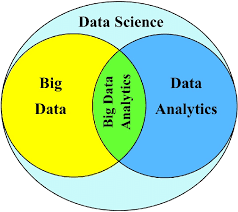
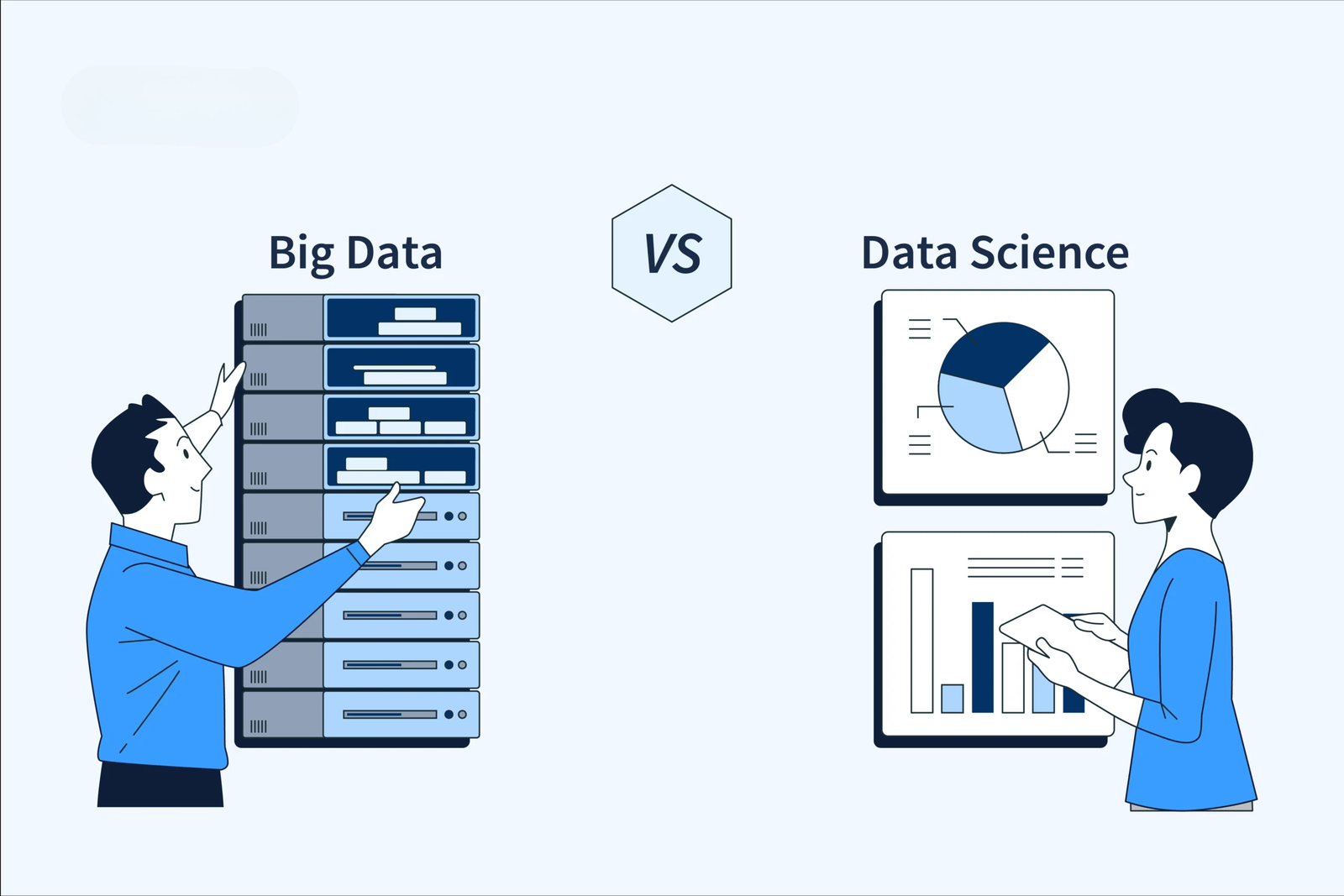
Although Data Science and Big Data are closely related, they serve different purposes within the data ecosystem.
| Feature | Data Science | Big Data |
|---|---|---|
| Primary Focus | Data analysis and insight generation | Handling and processing massive datasets |
| Goal | Discover patterns and predictions | Store, manage, and process large-scale data |
| Key Tools | Python, R, Machine Learning, Statistics | Hadoop, Spark, NoSQL databases |
| Role | Data interpretation and modeling | Data infrastructure and processing |
Data Science and Big Data are widely used across industries to solve complex problems and improve decision-making.
Healthcare organizations use data analytics to predict diseases, personalize treatments, and improve patient care through medical data analysis.
Banks and financial institutions use data science to detect fraudulent transactions, manage risk, and optimize investment strategies.
Online retailers analyze customer behavior and purchasing patterns to recommend products and improve user experience.
Companies use data-driven marketing strategies to target the right audience, analyze campaign performance, and understand consumer preferences.
Data analytics helps optimize routes, reduce operational costs, and improve supply chain management.
Businesses that leverage data science and big data gain several strategic advantages:
Improved decision-making through data-driven insights
Better understanding of customer behavior
Enhanced operational efficiency
Predictive analytics for forecasting trends
Competitive advantage in the digital marketplace
These benefits allow organizations to innovate faster and respond effectively to changing market conditions.
Data Science and Big Data have become essential components of modern technology and business strategy. While Big Data focuses on managing and processing massive datasets, Data Science extracts valuable insights that drive innovation and decision-making.
Organizations that effectively use data science and big data can gain deeper insights, predict future trends, and deliver better products and services. As the digital landscape continues to evolve, these technologies will remain at the core of business transformation and technological advancement.