
Quantum computing is often described as the next frontier in technology, promising breakthroughs in fields like cryptography, medicine, and artificial intelligence. While the potential is enormous, the reality is that quantum computing is still in its early stages. Several major challenges are preventing it from becoming widely practical.
Let’s explore the key obstacles holding quantum computing back today.
At the heart of quantum computers are qubits, which are extremely sensitive to their environment. Even the slightest disturbance—like temperature changes or electromagnetic interference—can cause them to lose their quantum state.
This problem, known as decoherence, leads to errors in computation and limits how long a quantum computer can perform calculations.
Unlike classical computers, quantum systems are highly error-prone. Operations on qubits (quantum gates) are not always reliable, which results in incorrect outputs.
To fix this, scientists are working on quantum error correction, but it requires a large number of extra qubits—making systems even more complex and expensive.
Building a quantum computer with just a few qubits is already difficult. Scaling that up to thousands or millions of qubits (which is needed for real-world applications) is a massive engineering challenge.
Current quantum machines are still far from reaching this level of scalability.
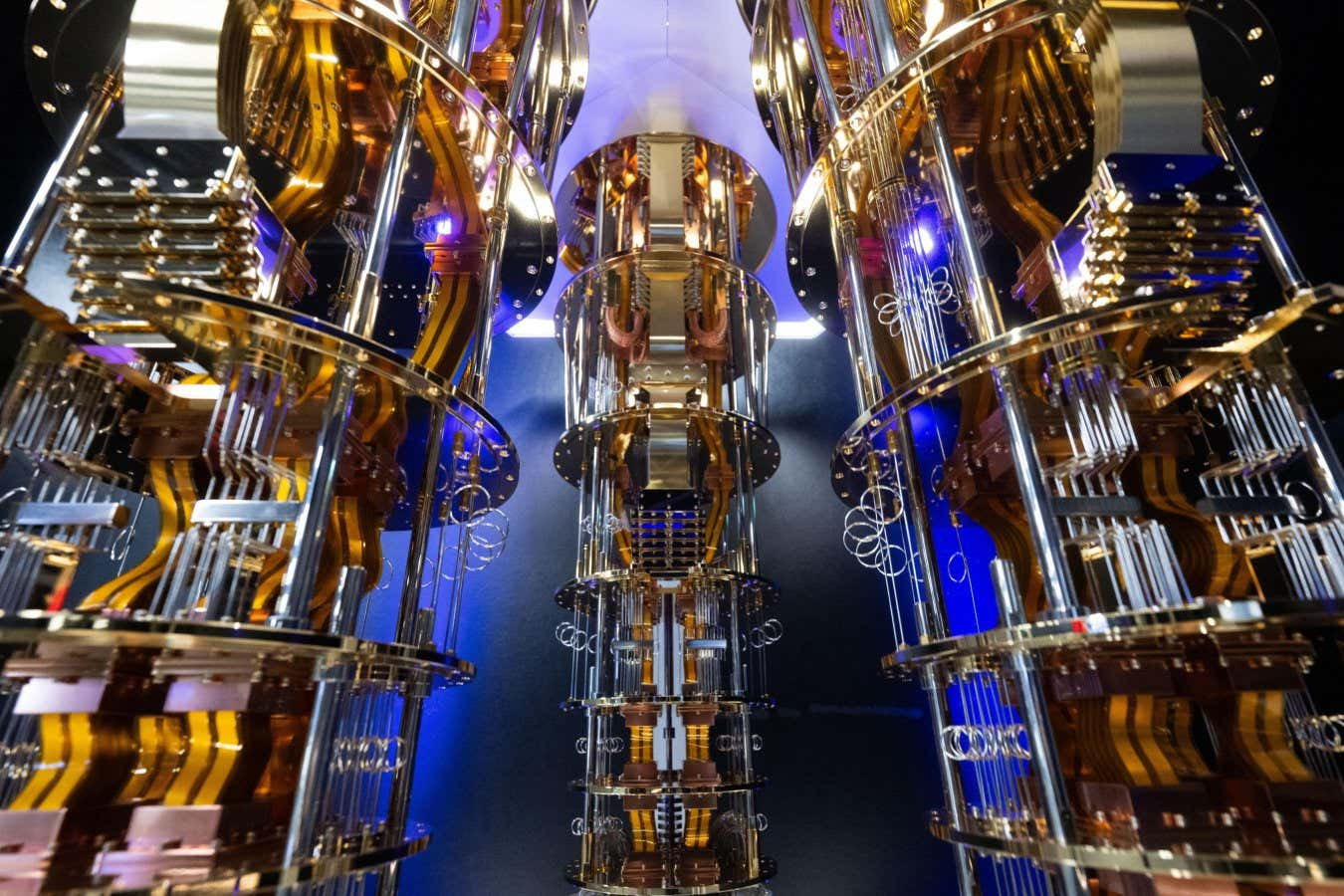
Most quantum computers need to operate at temperatures close to absolute zero (-273°C). This requires sophisticated and costly cooling systems.
Maintaining such environments makes quantum computers expensive and difficult to deploy outside of specialized labs.
While there are many theoretical use cases, real-world applications of quantum computing are still limited.
Most current quantum computers cannot yet outperform classical computers in practical tasks, except for very specific experimental scenarios.
Quantum computing combines physics, computer science, and mathematics, making it a highly specialized field.
There is currently a shortage of experts who can design, build, and program quantum systems, slowing down progress.
Different companies are building quantum computers using different technologies (superconducting qubits, trapped ions, etc.).
This lack of standardization makes it harder to develop universal tools, software, and frameworks.
Quantum computers are extremely expensive to build and maintain. As a result, access is limited to large corporations, research institutions, and governments.
This slows widespread experimentation and innovation.
Quantum computing holds incredible promise, but it’s not ready to replace classical computing just yet. Challenges like qubit instability, high error rates, and scalability must be overcome before it can reach its full potential.
However, progress is being made every year. As research advances, we can expect quantum computing to gradually move from experimental labs into real-world applications.

.png)