

Technology continues to evolve rapidly, and one of the most exciting breakthroughs in modern computing is Quantum Computing. Unlike traditional computers that process data using bits, quantum computers use quantum bits (qubits), allowing them to solve complex problems much faster than classical systems.
Quantum computing has the potential to transform industries such as healthcare, finance, cybersecurity, and artificial intelligence. As research and development accelerate, this technology is expected to reshape the future of computing.
Quantum computing is an advanced computing technology based on the principles of quantum mechanics, the branch of physics that studies the behavior of particles at the atomic and subatomic level.
Traditional computers process information using bits, which can be either 0 or 1. In contrast, quantum computers use qubits, which can exist in multiple states simultaneously due to a phenomenon called superposition. This ability allows quantum computers to perform many calculations at once.
Another key concept in quantum computing is entanglement, where qubits become interconnected so that the state of one qubit can influence another instantly, even over large distances.
These properties make quantum computers incredibly powerful for solving complex problems.
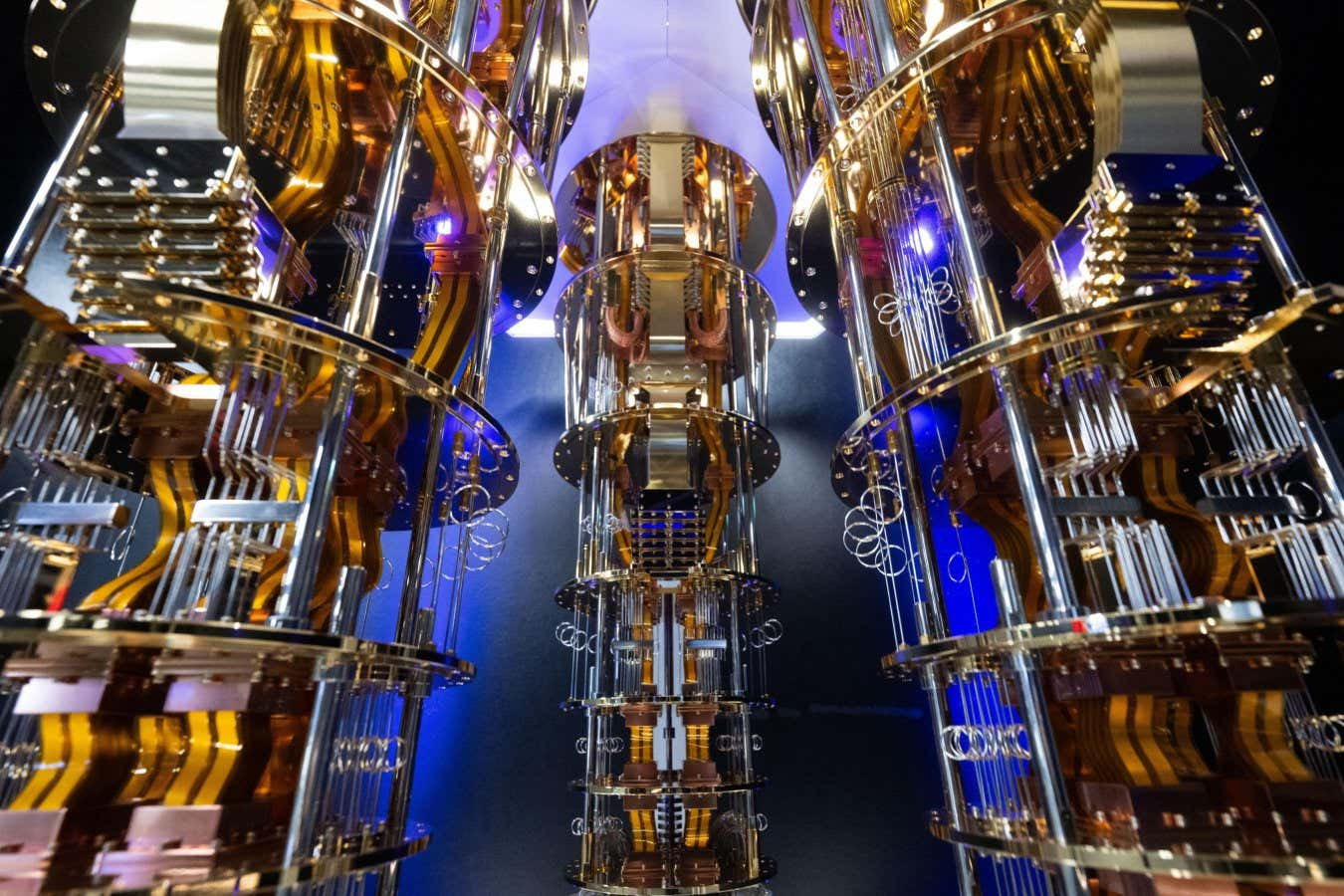
Quantum computers operate using specialized hardware that maintains qubits in extremely controlled environments. These environments are often extremely cold to prevent interference from external factors.
Key principles behind quantum computing include:
Superposition – A qubit can represent both 0 and 1 at the same time.
Entanglement – Qubits can be linked together so that the state of one affects the other.
Quantum Interference – Helps amplify correct answers and cancel incorrect ones during computation.
By leveraging these principles, quantum computers can explore multiple possibilities simultaneously, enabling faster problem-solving.
Quantum computing offers several potential advantages over traditional computing systems.
Quantum computers can process complex calculations that would take classical computers thousands of years.
Quantum computing can simulate molecular structures accurately, helping scientists discover new medicines faster.
Machine learning algorithms could become more powerful and efficient with quantum computing capabilities.
Industries like logistics, transportation, and finance can optimize routes, investments, and operations more effectively.
Quantum technologies could create new forms of encryption that are extremely secure.
Although quantum computing is still developing, several practical applications are already being explored.
Healthcare – Simulating complex biological systems for drug development.
Finance – Risk analysis, fraud detection, and portfolio optimization.
Artificial Intelligence – Improving machine learning models and data analysis.
Climate Modeling – Simulating environmental changes more accurately.
Cryptography – Developing next-generation security systems.
Despite its incredible potential, quantum computing faces several challenges
Quantum systems are extremely sensitive to environmental disturbances.
Building stable qubits is technologically difficult.
Quantum computers require specialized infrastructure and cooling systems.
The technology is still in its early stages and expensive to develop.
Researchers around the world are working to overcome these challenges and make quantum computing more practical.
Many technology companies and research organizations are investing heavily in quantum computing research. As hardware improves and quantum algorithms evolve, quantum computing could become a mainstream technology in the coming decades.
The combination of quantum computing, artificial intelligence, and advanced data analytics could unlock solutions to some of the world’s most complex problems.
Quantum computing represents a major leap forward in computational power. By using the principles of quantum mechanics, these systems can perform calculations far beyond the capabilities of traditional computers.
Although the technology is still developing, its potential to transform industries and solve complex global challenges makes quantum computing one of the most exciting innovations of the 21st century.
.png)