
In the ever-evolving world of technology, quantum computing stands out as one of the most fascinating and potentially revolutionary advancements. While classical computers have powered humanity’s digital growth for decades, quantum computers promise to take us into an entirely new era of computational power.
At its core, quantum computing is based on the principles of quantum mechanics—a branch of physics that studies the behavior of particles at the smallest scales. Unlike traditional computers that use bits (which can be either 0 or 1), quantum computers use qubits. What makes qubits special is their ability to exist in multiple states simultaneously, a property known as superposition. This allows quantum computers to process a vast number of possibilities at once.
Another important concept is entanglement, where qubits become interconnected in such a way that the state of one instantly influences the state of another, no matter the distance between them. This phenomenon enables quantum systems to perform complex calculations much more efficiently than classical systems.
So, why does this matter? Quantum computing has the potential to transform industries. In healthcare, it could accelerate drug discovery by simulating molecular interactions at an unprecedented scale. In cryptography, it could both break existing encryption methods and inspire new, more secure ones. Financial modeling, climate prediction, and artificial intelligence are just a few other areas that could benefit from this powerful technology.
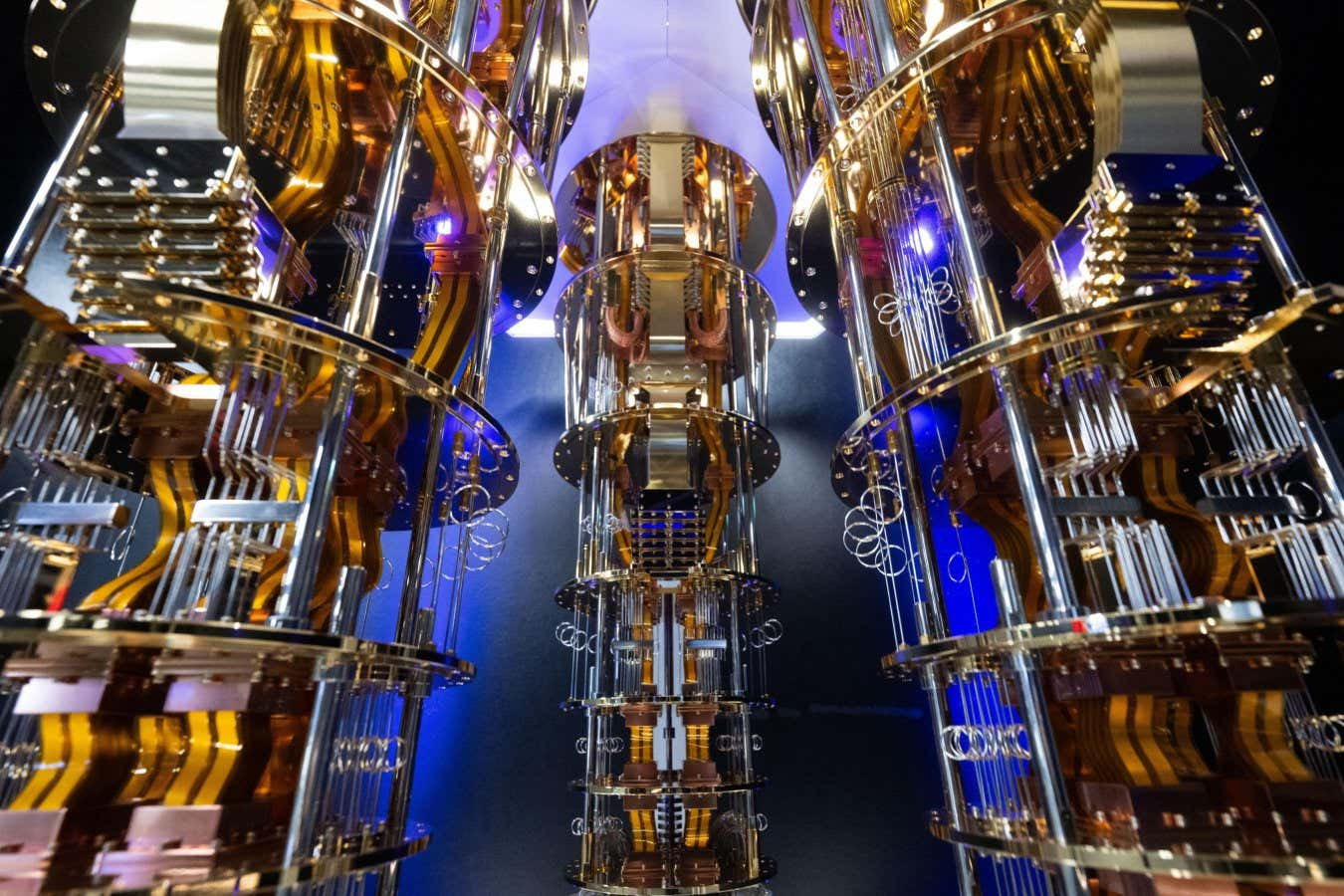
However, quantum computing is still in its early stages. Building stable and reliable quantum systems is extremely challenging due to issues like decoherence, where quantum states lose their information due to environmental interference. Researchers and tech companies around the world are actively working to overcome these hurdles.
Despite these challenges, the progress made so far is promising. As research continues, quantum computing may soon move from experimental labs to real-world applications, reshaping how we solve some of the world’s most complex problems.
In conclusion, quantum computing represents a paradigm shift in how we understand and use computation. While it may not replace classical computers entirely, it will likely complement them, tackling problems that were once considered impossible. The future of computing is not just faster—it’s fundamentally different.

.png)