
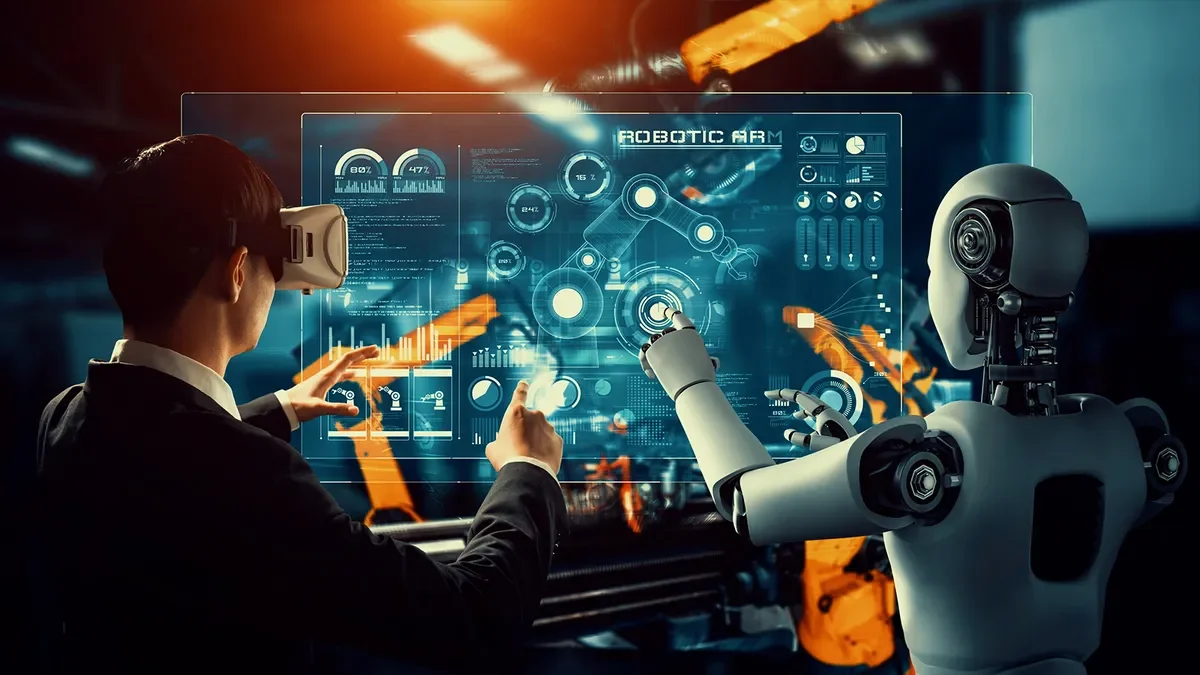
Robotics is one of the most exciting and rapidly evolving technologies of the modern era. From manufacturing factories and hospitals to space exploration and smart homes, robots are transforming how industries operate and how people interact with technology.
As advancements in artificial intelligence, machine learning, and automation continue to grow, robotics is becoming an essential part of innovation and digital transformation. Businesses are increasingly adopting robotic systems to improve efficiency, reduce operational costs, and enhance productivity.
In this article, we’ll explore what robotics is, how it works, its applications, benefits, and the future of robotics technology.
Robotics is a branch of engineering and technology that focuses on the design, construction, operation, and use of robots. Robots are programmable machines capable of performing tasks automatically or semi-automatically.
Robotics combines multiple fields, including:
Mechanical engineering
Electrical engineering
Computer science
Artificial intelligence
Control systems
By integrating these technologies, robots can perform complex tasks that would otherwise require human effort.
Robots operate using a combination of hardware and software systems that enable them to sense, process information, and perform actions.
1. Sensors
Sensors allow robots to detect and interact with their environment. They can measure temperature, distance, pressure, motion, and more.
2. Actuators
Actuators are responsible for movement. They convert energy into motion, allowing robots to move arms, wheels, or other components.
3. Control Systems
The control system acts as the robot’s brain. It processes data from sensors and sends commands to actuators.
4. Software and Programming
Robots are programmed using specialized software that defines how they perform tasks and respond to different situations.
Robots come in many different forms depending on their purpose and industry.
Industrial robots are widely used in manufacturing plants for tasks such as welding, painting, assembly, and packaging. They improve speed, precision, and consistency.
Service robots assist humans in everyday tasks. Examples include cleaning robots, delivery robots, and hospitality robots.
Medical robots assist surgeons during complex procedures, improving accuracy and minimizing risks. They are also used for rehabilitation and patient care.
Autonomous robots operate independently without direct human control. These robots use artificial intelligence and sensors to navigate environments.
Humanoid robots are designed to resemble humans and perform tasks similar to people, such as communication, assistance, and interaction.
Robotics technology is transforming multiple industries worldwide.
Manufacturing is one of the largest adopters of robotics. Robots perform repetitive tasks with high precision, increasing productivity and reducing production errors.
In healthcare, robots assist in surgeries, diagnostics, and patient care. Surgical robots allow doctors to perform minimally invasive procedures with greater precision.
Agricultural robots help farmers automate tasks such as planting, harvesting, irrigation, and crop monitoring.
Robots are widely used in warehouses for sorting, packing, and transporting goods. This improves operational efficiency and speeds up delivery processes.
Robots are used in space missions to explore planets, collect data, and perform tasks that are too dangerous for humans.
Robots can operate continuously without fatigue, allowing businesses to maintain high productivity levels.
Robots perform tasks with extreme precision, reducing errors and improving product quality.
Although the initial investment may be high, robotics reduces long-term labor and operational costs.
Robots can perform hazardous tasks, reducing the risk of injuries for human workers.
Automation enables businesses to accelerate production cycles and meet growing market demands.
Despite its advantages, robotics also faces several challenges.
AI-powered robots capable of learning and decision-making
Collaborative robots (cobots) working alongside humans
Swarm robotics where multiple robots work together
Soft robotics designed with flexible materials
Autonomous vehicles and delivery robots
As robotics becomes more intelligent and accessible, it will continue to reshape industries and redefine the way humans work and live.
As robotics becomes more intelligent and accessible, it will continue to reshape industries and redefine the way humans work and live.