
In the past, businesses needed large physical servers and expensive hardware to store data and run applications. Managing these systems required significant investment, maintenance, and technical expertise. Today, cloud computing has completely transformed how companies handle their digital infrastructure.
Cloud computing allows individuals and businesses to store data, run applications, and access computing power over the internet instead of relying on local machines. This shift has made technology more flexible, scalable, and affordable for organizations of all sizes.
From startups to global enterprises, cloud computing has become a core part of modern IT systems. Services like online storage, video streaming, mobile apps, and even artificial intelligence rely heavily on cloud infrastructure.
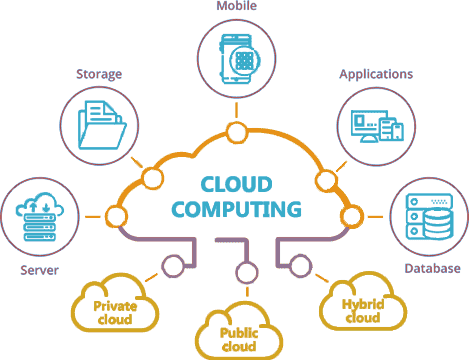
Cloud computing refers to the delivery of computing services over the internet, often called "the cloud." These services include servers, storage, databases, networking, software, and analytics.
Instead of buying and maintaining physical hardware, companies can simply rent the resources they need from cloud providers. This means businesses can scale their operations quickly without worrying about infrastructure limitations.
Some of the major cloud service providers include companies like Amazon Web Services, Microsoft Azure, and Google Cloud. These platforms provide powerful tools that help organizations build, deploy, and manage applications efficiently.
Cloud computing environments are generally divided into three main types.
A public cloud is managed by third-party cloud service providers. The infrastructure is shared among multiple users, but each user’s data remains secure and isolated.
Public cloud services are widely used because they are cost-effective, scalable, and easy to access.
A private cloud is dedicated to a single organization. It provides greater control, customization, and security for businesses that handle sensitive data.
Private clouds are commonly used in industries such as banking, healthcare, and government sectors.
A hybrid cloud combines both public and private cloud systems. This approach allows companies to store sensitive data in a private environment while using public cloud services for general workloads.
Many organizations prefer hybrid cloud because it offers flexibility and improved efficiency.
Cloud computing services are also categorized based on the type of service provided.
IaaS provides virtualized infrastructure such as servers, storage, and networking. Businesses can build and manage their own applications while the cloud provider manages the hardware.
PaaS offers a complete development environment where developers can build, test, and deploy applications without worrying about managing the underlying infrastructure.
SaaS delivers software applications directly through the internet. Users simply access the software through a browser without installing anything.
Common examples include email platforms, collaboration tools, and online business applications.
One of the biggest advantages of cloud computing is reduced infrastructure cost. Businesses only pay for the resources they actually use.
Cloud platforms allow organizations to quickly increase or decrease computing resources depending on demand.
With cloud computing, data and applications can be accessed from anywhere with an internet connection. This enables remote work and global collaboration.
Leading cloud providers invest heavily in advanced security technologies, including encryption, monitoring systems, and regular backups.
Cloud systems automatically update software and security patches, ensuring that systems stay current without manual maintenance.
Cloud computing continues to evolve as new technologies emerge. Innovations such as artificial intelligence, machine learning, and big data analytics are increasingly integrated into cloud platforms.
Another growing trend is edge computing, which processes data closer to the source instead of relying entirely on centralized servers. This helps reduce latency and improve performance for real-time applications.
As businesses continue their digital transformation journey, cloud computing will remain a key driver of innovation and efficiency.
Cloud computing has revolutionized the way organizations store data, run applications, and deliver services. By eliminating the need for expensive hardware and providing flexible access to powerful computing resources, the cloud has become an essential part of modern technology.
As digital systems continue to expand, the importance of cloud computing will only grow. Businesses that adopt cloud solutions today are better positioned to innovate, scale, and compete in the rapidly evolving digital landscape.