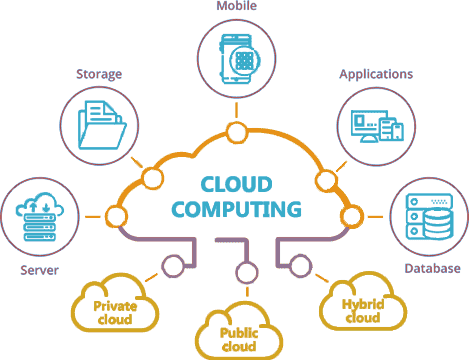
In the modern digital era, cloud computing has become a fundamental part of how individuals and businesses access and manage technology. Instead of relying on physical hardware or local servers, cloud computing allows users to store data and run applications over the internet, offering flexibility, scalability, and efficiency.
Cloud computing refers to the delivery of computing services—such as storage, processing power, and software—through remote servers hosted on the internet. Popular examples include online storage platforms, streaming services, and web-based applications that can be accessed from anywhere with an internet connection.
One of the biggest advantages of cloud computing is scalability. Users can easily increase or decrease resources based on their needs without investing in expensive hardware. This is especially beneficial for businesses that experience fluctuating demand.
Another key benefit is cost efficiency. With cloud computing, organizations pay only for the resources they use, reducing the need for upfront investments in infrastructure. It also lowers maintenance costs, as service providers handle updates, security, and system management.
Cloud computing also enhances collaboration. Teams can access shared files and applications in real time from different locations, making remote work more efficient. This has become particularly important in today’s global and flexible work environment.
There are different types of cloud services. Infrastructure as a Service (IaaS) provides virtualized computing resources, Platform as a Service (PaaS) offers tools for developing applications, and Software as a Service (SaaS) delivers software over the internet. Each model serves different needs, from developers to end users.
Despite its advantages, cloud computing also presents challenges. Data security and privacy remain major concerns, as sensitive information is stored on remote servers. Additionally, dependence on internet connectivity can affect accessibility during outages.
As technology continues to evolve, cloud computing is being integrated with emerging fields like artificial intelligence, big data, and edge computing. These integrations are enabling more powerful and intelligent systems across industries.
In conclusion, cloud computing has revolutionized the way we use and manage technology. By providing on-demand access to resources and services, it has made computing more accessible, efficient, and scalable. As adoption continues to grow, cloud computing will remain a key driver of digital transformation in the years to come.